Monday, May 27, 2019

What is Pain, and How Should We Manage It?


Today's post is written by a very special friend of mine, Dr. Fred Goldstein. Dr. Goldstein is a Professor of Clinical Pharmacology at Philadelphia College of Osteopathic Medicine. Dr. Goldstein and I go WAY back to when his daughter and I played in the same basketball league as kids.

The topic of today's post is pain, which Dr. Goldstein is a true authority on. He's been teaching about and researching pain for even longer than I've been alive! I learned a ton from reading his article, and I think you will, too. -Travis
Related image

WHAT IS PAIN, AND HOW SHOULD WE MANAGE IT?

Frederick J. Goldstein, PhD, FCP
Professor of Clinical Pharmacology
Philadelphia College of Osteopathic Medicine

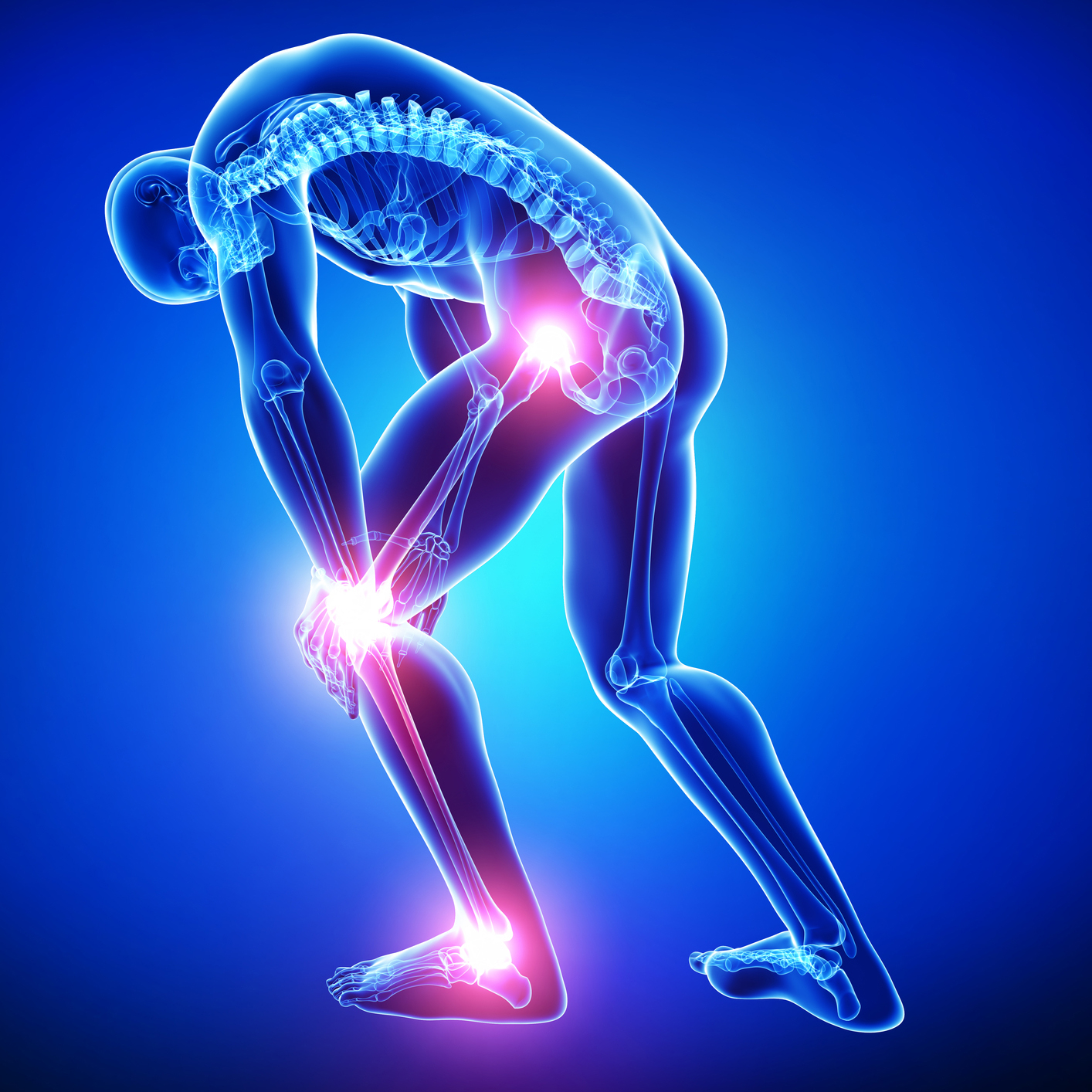
What is pain? Toothache? Sprained wrist? Broken femur? Myocardial infarct (MI)? Obviously, all such conditions are “nociceptive,” meaning they send signals from pathological sites to brain areas for interpretation. Simultaneously activated are emotions which can certainly increase the intensity of such cellular indicators of tissue damage.

However, it is also known that circumstances exist where pain is attenuated or, in some cases, not even felt. A person who has experienced three MIs over the years will probably feel less alarm with a fourth one than the first. Soldiers in a fierce battle may not even be aware of severe wounds until that firefight has ended.

Of course, there is also psychological pain which occurs upon losing a loved one or receiving news that the cancer which has been discovered is, unfortunately, terminal.

Thus, there is always an interplay between physical and psychological aspects of pain.

Monday, May 6, 2019

The Keys to Unlocking Explosive Power


It wasn’t too long ago that athletes, parents, and coaches believed strength training made you slow and inflexible. To avoid these supposed undesirable effects, athletes steered clear of weights like the plague.

Over the years, we’ve come to debunk these myths. We now recognize the myriad benefits of strength training for sports performance, from injury prevention to increased positional endurance and improved speed and power -- the subject of this post.

Most of us have a general idea of what power is. We know it when we see it. But it’s not entirely intuitive how strength affects power.

To appreciate the relationship between strength and power, we must first understand that strength is equivalent to the ability to produce force, and speed is the expression of strength quickly (i.e. at high movement velocity).

Friday, April 26, 2019

Why Every Kid Should Play Multiple Sports


If you’ve been paying attention to youth sports over the last few decades, you’ve probably noticed a similar trend. Winter rolls around, and Little Johnny, age 11, signs up for peewee hockey. He recently hit a growth spurt and is a solid six inches taller than most of his friends.

Thanks to his size, Johnny dominates in his first season. The coach tells Johnny’s parents he has a bright future ahead of him on the ice. He urges them to forego the spring season of baseball (and basketball in the fall) to concentrate on skating.

Over the next few years, Johnny continues to shine. His parents thrust him onto the ice more and more until he’s playing competitively year-round. At age 15, Johnny starts complaining of hip pain. His doctor recommends physical therapy and time off from hockey.

When Johnny returns to the ice a few months later, his peers all seem to have caught up to him in stature. He can no longer use his size to dominate opponents. Johnny has his worst season to date and loses some of his love for the game.

To regain his previous form, Johnny signs up for extra power skating clinics on top of his regular competitive seasons. Lo and behold, due to these added rigors Johnny’s hip flares again.

For the next three years, the pattern repeats over and over again until Johnny is finally forced to undergo career-ending surgery at the age of 18.

What went wrong? Johnny had so much promise as a youngster. Or did he?

Tuesday, March 5, 2019

Do’s and Don’ts for Recovering from Injury

Have you ever wanted to be able to do one thing so badly, yet it was the only thing you couldn't do?

There I was, a little over a month ago, standing underneath my pull-up bar. Like any other morning, I was planning to hammer out a few reps before starting my schoolwork. Only this day turned out not to be like any other morning. As I started my first rep, pain seared through my back and arm muscles. Thinking I was just sore from rock climbing the day before, I tried again. The result was the same: shooting pain.

I had never felt this type of pain before. It took me a few moments to wrap my mind around the reality of the situation: I was injured.

The strange thing is that I don't remember suffering the injury. It must have happened while rock climbing, but I couldn't recall an acute episode where the injury occurred. I just woke up that morning and had intense pain when I tried the pull-up.

Assuming the injury was minor, I rested up for a few days and tried a pull-up again. Searing pain just like the previous go round. The severity of the injury was beginning to dawn on me. It was going to be a hot minute until I’d be back to doing any pull-ups or climbing.

As a calisthenics junkie, I was majorly bummed. Just a few weeks before, I'd set a new personal best time for 100 pull-ups. Now I couldn't do a single one.


Thinking back, there were some yellow flags that an injury was brewing. In the days leading up, I was more sore than normal and had a harder time loosening up when I climbed. I didn't think anything of it at the time, and I obviously should have.

My eternal optimism wouldn’t allow me to wallow for long, though. I decided to take my own advice. I reframed the situation as an opportunity for self-growth rather than a setback, and I set to work on rehab.

Monday, January 28, 2019

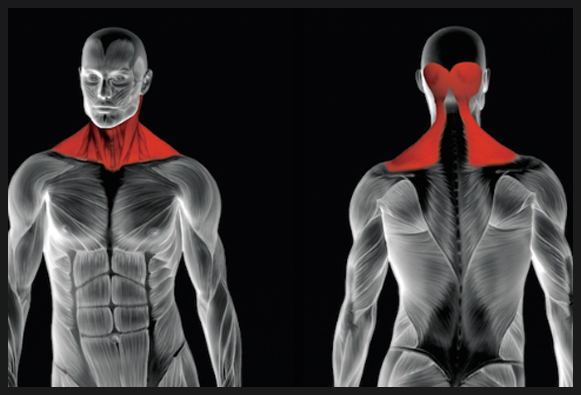
The Body Part You've Been Neglecting in Your Training – And What to do About It


Q&A with Sandesh Rangnekar

Note from Travis: A few weeks ago, I saw a great Instagram post from my friend Sandesh Rangnekar on neck training. After sliding into his DMs to ask him a few follow-up questions, I knew I had to share his great information. I hope you learn as much from this Q&A as I did!

Travis Pollen: What types of people should train their neck? 

Sandesh Rangnekar: The answer is pretty simple. Have a neck? Train it!


TP: Why is neck training so important?

SR: The entire world of rehab and strength and conditioning goes batshit crazy when asked about “core.” Ever thought of the benefits if you start considering the neck as part of the “core” and train it? If you look at it on a larger canvas, there are two school of thoughts here. One school of thought is that the core musculature consists of the lumbo-pelvic-hip complex (including the abs!), or simply put the muscles in and around the hip and low back region. The other kind of “in the trenches” school of thought is that everything is core and everything is connected. I favor the latter.